Confused? Organize Your Information

We all think with ideas and information that we hold in working memory. Working memory is like a scratch pad with a succession of content on the pad that is streamed into the brain's thinking apparatus. What is held on the working memory scratch pad is either retrieved from memory or inserted from real-time experience (like what you are reading or hearing).
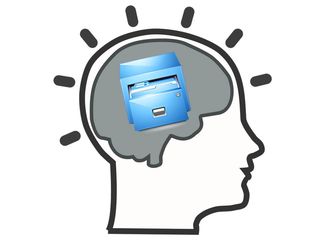
W. R. Klemm
Source: W. R. Klemm
So, how does organization apply? As the brain seeks information to put on the scratch pad, it has to know where it is. Thinking is slow at best and possibly incoherent if ideas and information are located in disorganized repositories (such as sticky notes, memos, documents located randomly in different places. How can anyone keep a stream of coherent thought going if there is constant interruption trying to find the note or document one needs at each stage of thinking?
The other thing is that working memory has very limited capacity. Thus, when accessing notes and documents to use in thinking, the content needs to be easily extractable in small chunks. Here is an example that we can all relate to. Congress seems wedded to producing omnibus bills of some 2,000 or more pages. Even if legislators read the entire bills, they couldn't digest the content in any coherent way because the bills are not designed for thinking. No surprise then that we end up with incoherent, ineffective, and even destructive legislation.
Common Sense Methods for Organizing. The underlying principle should be to have a place for everything and put everything in its place. Examples:
  • Put important items (bills, car keys, purse, etc.) in their own same place.
  • Put sticky note reminders in key places.
  • Keep a calendar (but remember to check it each day).
  • Get a file cabinet and label the files in the most meaningful ways.
  • Have a tote bag or briefcase that always has in it what you need for the day.
Be proactive. If information of a given type accumulates over time, don't wait until the end to organize it. Organize as it goes along. For example, my federal tax information accumulates throughout the year. I don't wait until tax time to organize it. As bills, receipts, and the like come in during the year, I file them in file cabinet folders I have already set up for income tax return preparation. Come April, I can put all the information the tax accountant needs in a matter of a few minutes. And it reduces his time, which lowers my tax preparation bill.
Computer Methods. Computers give us access to enormous amounts of information. But the bad news is that the more information, the greater the need for good organization.
In the case of web-site addresses, most browsers have good systems for bookmarks, but after a couple years of saving bookmarks I find that I have not been sufficiently thoughtful as to how I set up folders and sub-folders.
For other kinds of information, the demand for organizational sophistication varies with the home and workplace workload. Here are a few, free, computer tools:

Tools that Synchronize Across Devices

  • One-Note On-line is included in Microsoft Windows. It allows creation of separate notebooks, and labeled "pages" within each notebook that accept separately pasted items that can be dragged about the page.
  • Evernote helps you keep all sorts of notes in topic-specific notebooks.
  • Google Docs is like Evernote, but is document focused.
  • Google Calendar helps you track events, set reminders, import appointments straight from Gmail, and is shareable.
  • Remember the Milk is a "to-do" reminder. It has specific apps for the web and multiple portable devices and you can connect it to multiple devices. It syncs with Outlook or Google mail.

Other Tools

  • TelePixie sends wake-up calls, reminders, and alerts to your mobile phone.
  • Sticky Notes comes with Microsoft Windows and is a computer version of the paper sticky notes you put on the refrigerator, walls, and elsewhere. You can keep the notes open all the time on the computer desktop or temporarily closed.
  • Stickies is a much more sophisticated system that runs on Windows. Unlike Sticky Notes which appear all at once on the desktop, Stickies notes are separately attached only to whatever document you are working on.
  • Flashcards provides a simple way to create flashcards with the information you are trying to learn and drill yourself to help make it stick in your mind.
  • WiseMapping is a mind mapping tool that provides you with an awesome way to keep notes in an organized fashion. Items in the map can have attached text commentary. Maps can be shared and exported in multiple formats.
Readers wanting to know more about how the brain works may be interested in Dr. Bill's recent book, Mental Biology (Prometheus).
Share:

No comments:

Post a Comment

Popular Posts

Labels

Blog Archive

Featured post

Take the Stress out of School

Got kids or grandkids in school? Are you in school or college? This blog is for you. I don’t have to tell you that school is stressful, what...

Tag

ADHD Alzheimer's disease Berkeley CREB Dale Carnegie Depression Dept. Education EEG EEG coherence Einstein Erta Finland I IQ Internet learning Kagel Krebs MRI Memory Power 101 Memory improvement NeuroRacer No Child Left Behind Npas4 PTSD Pauling SVO TED talk TV Thielen Trump W. R. Klemm accumens addiction adolescents adrenalin advertising aerobic exercise age agency aggression aging alpha ambiguity amygdala analysis anger anterior cingulate anti-oxidant anti-oxidants anxiety application attention attitude avatar bad memories bariatric surgery behavioral economics belief beta bias blame blueberries body mass index brain brain connectivity brain development brain exercise brain fitness brain research brain scans brain shrinkage brains have owners cell parts child development chocolate choice chunking cingulate cortex classroom environments clutter coffee cognition cognitive development cognitive resources coherence collaborative learning college comedians comedy comparison competence conditioned reflex conditioning consciousness consolidation constructivism context cortisol creativity critical thinking cueing cursive cytokine deception decision-making development diabetes diet discipline dishonesty drawing dream dream sleep dual N back dyslexia education education policy educational TV educational neuroscience educational policy educaton elements of learning emotions empathy encoding environment epigenetics episodic memory evidence excuses executive control executive function exercise expectations expert fMRI false memory family famous active seniors fear memory feed forward feedback flash cards focus forced retrieval forgetting free radicals free will functional connectivity gamma gene activation genes genetics glucocorticoids glucose glutamate government government policy grades grit gym habit habituation hand-eye coordination handwriting happiness hate speech health heart disease high-stakes testing hippocampus home school homework hostility identity politics images improve reading inflammation inheritance insight intelligence interference interference theory interference theory of memory irrational jazz jogging journal joy judgment kindergarten knowledge standards lasting memory learn to learn learning learning and memory learning competencies learning how to learn learning to learn learning to lie lie life span lifestyle location logic logic errors long-term memory love lying lyrics magazine managing information manipulation math melatonin memory memory athlete memory athlete tips memory athletes memory consolidation memory gimmicks memory graphic memory palace memory recall memory rehab memory rehearsal memory research memory tips memory tricks mental activity mental health mental rest method of loci method-of-loci mnemonic mnemonics monkey motivation movement feedback multi-tasking multiple sclerosis music music education myelin myth myths n-back training naps negative attitudes neocortex networks neural circuits neural plasticity neuro-education neurons neuroplasticity neuroscience noise note taking note-taking nurture obesity omega-3 operant conditioning optogenics organization oscillation pain past play politics positive emotions positive reinforcement post-traumatic stress disorder pray pre-K pre-kindergarten prefrontal cortex present primates proactive inhibition problem solving production effect progressive prostate psychology psychotherapy public speaking re-consolidation reading reading aloud reading comprehension reason recall recognition memory rehearsal reinforcement relationships relationships. forgiveness religion research resveratrol retrotransposons reward riots schema school school budgets school choice school policy schools science education selective attention self self-confidence self-efficacy self-esteem self-help self-knowledge self-test self-worth sensation sense of self sleep sleep apnea sleep disorders sleep learning smart smart phones social engagement social interactions space spaced learning stereotype story chains stress students study study habits study intervals synapses synthesis tea teacher accountability teacher education teacher survey teachers teaching technology teenagers television tests therapy theta thinking thinking errors time timing tips training trivia truth tumeric unconscious unconsciousness understanding universities video games vision visual tracking vitamin D vitamin E web portal wine wisdom withdrawal women wonder working memory working memory improvement workplace